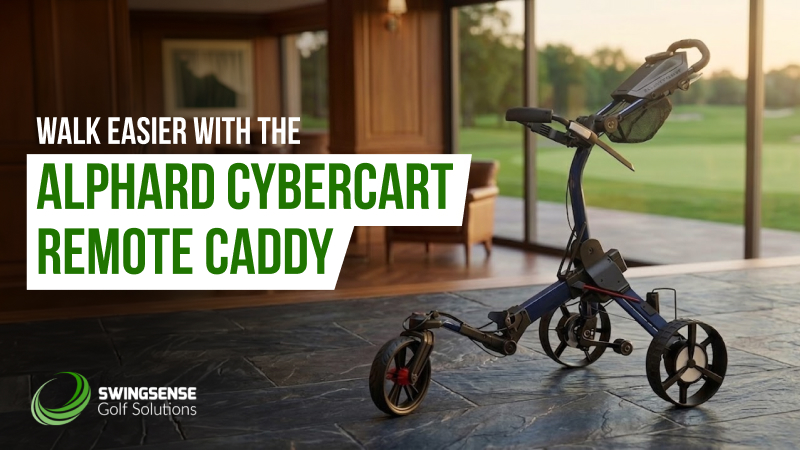
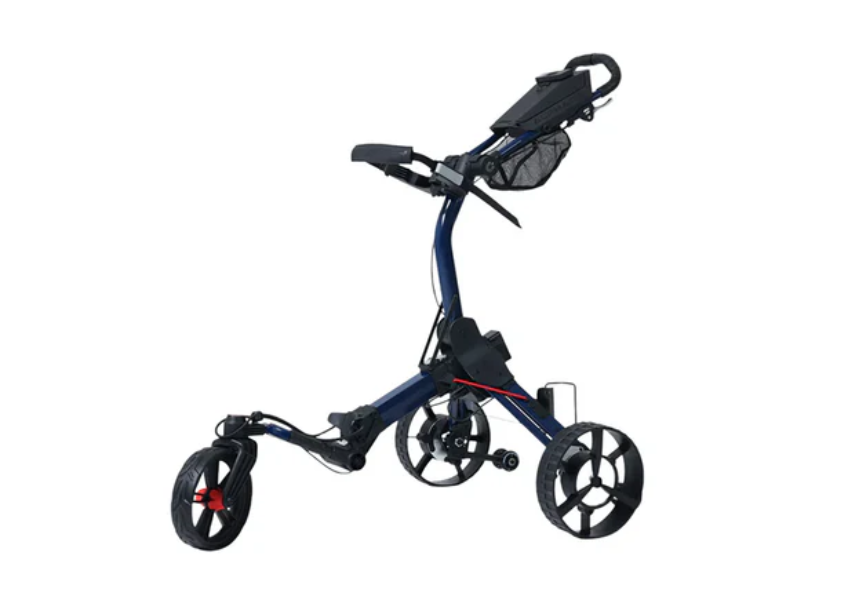
You know that small win when a tool quietly does the hard work so you can play better? The Alphard Cybercart is built for that: a remote-controlled electric golf caddy that lets you keep walking without hauling the weight. It folds small, runs long, and leans on tech, gyros and downhill control to behave more like a careful caddie than a noisy gadget.
Why precise remote control actually changes a round
Hand-steering a trolley is fine… until the hill is not. Remote control gives you consistent speed, easier line-of-play, and the freedom to set up shots while the cart holds position. The Cybercart’s LCD remote, out-of-range auto-stop, and front-wheel lock are the differences between a gadget that frustrates and a tool that disappears into the background. For gamers who value tight input → reliable output, it’s the real-world equivalent of low input lag and crisp controls.
How the Cybercart handles the course (and why that matters)
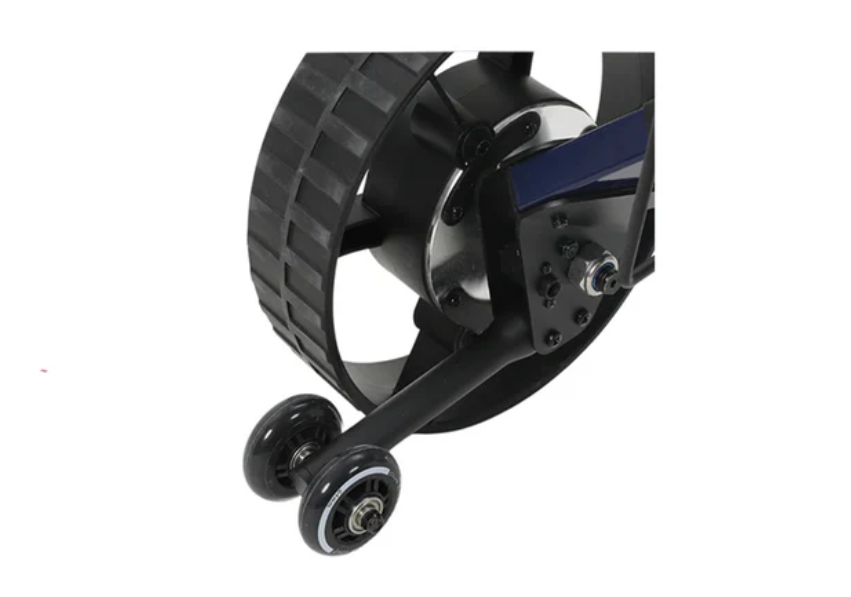
The Cybercart runs on twin hub motors (2 × 180W) and a 37V, ~236.8Wh lithium pack that Alphard and sellers say will cover many holes; they list up to 36 holes under normal use. The cart also uses a 6-axis gyroscope plus downhill speed control and an automatic parking brake, so steep fairways don’t turn into runaway moments. Those systems mean it behaves like a caddie who reads the slope for you, rather than a cart that surprises you when gravity gets involved.
Fold, stow, travel, no drama
One-click folding and a low-centre frame make setup and storage painless. Folded footprint (about 25″ × 20″ × 17.7″) and a compact design let it slip into most trunks; the whole process is designed to be fast enough that it doesn’t steal the start of your round. If you travel to play, the Cybercart’s compact fold and freewheel (manual) mode lets you treat it like a travel tool rather than a workshop project.
How the Cybercart stacks up against the competition
The remote electric trolley market is crowded with solid options, and a few patterns stand out:
Stewart Golf Vertx / Vertx Remote: premium terrain control and a lighter chassis (Vertx lists ~14.1 kg / ~31 lbs without battery) and similar twin-motor stability; Stewart focuses on refined motor engineering and compact folded size. The Vertx often gets top marks for handling.
Motocaddy M7 / ME Remote: Motocaddy’s remote models are praised for compact folding, responsive remotes, and excellent value; battery runtimes vary (some Motocaddy Ultra packs claim up to ~27–36 holes depending on model), and the M7 is a top-seller for players who want polished ergonomics.
MGI Zip / Zip Navigator / Ai 500: these offer lighter frame options and remote control or AI/GPS features; the Zip Navigator is noted for compact folded size and good stability for its class.
Where the Alphard Cybercart stands out: its combination of gyroscope-based stability, downhill speed control, and a claimed very long single-charge range (up to 36 holes) positions it as a “stability-first” choice. That comes with a trade-off: the Cybercart sits heavier than some rivals (the chassis is around 37–38 lbs plus ~3 lbs battery), so if you want the lightest package for trunk lifts, other models may be easier to handle. Overall, reviewers and roundups place Alphard as a unique, stability-focused offering rather than a price- or ultra-light leader.
Built like a dependable tool, not a showpiece
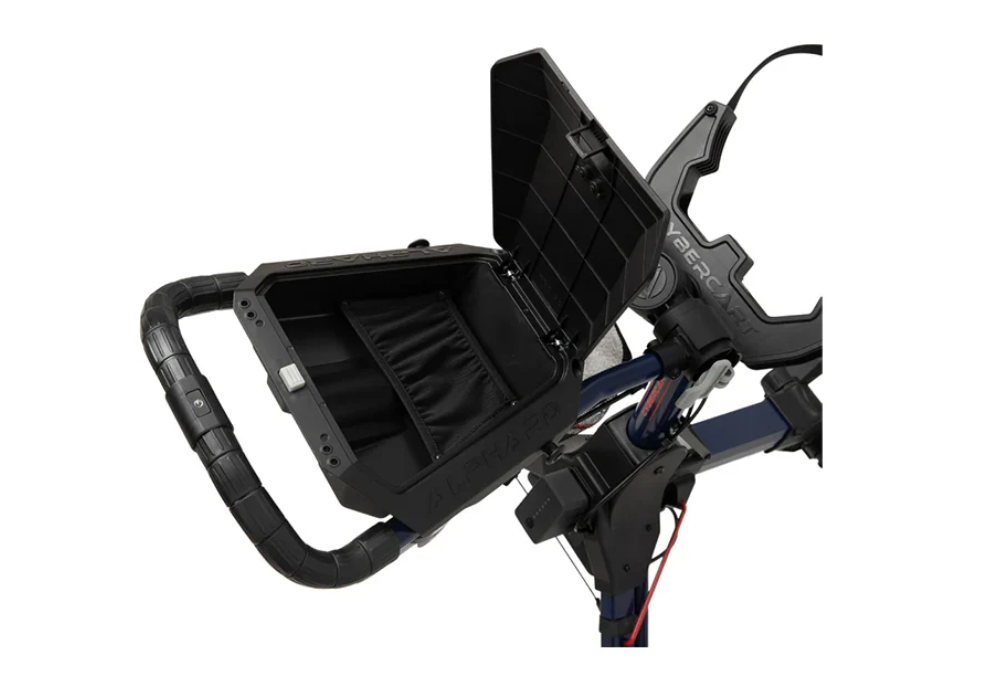
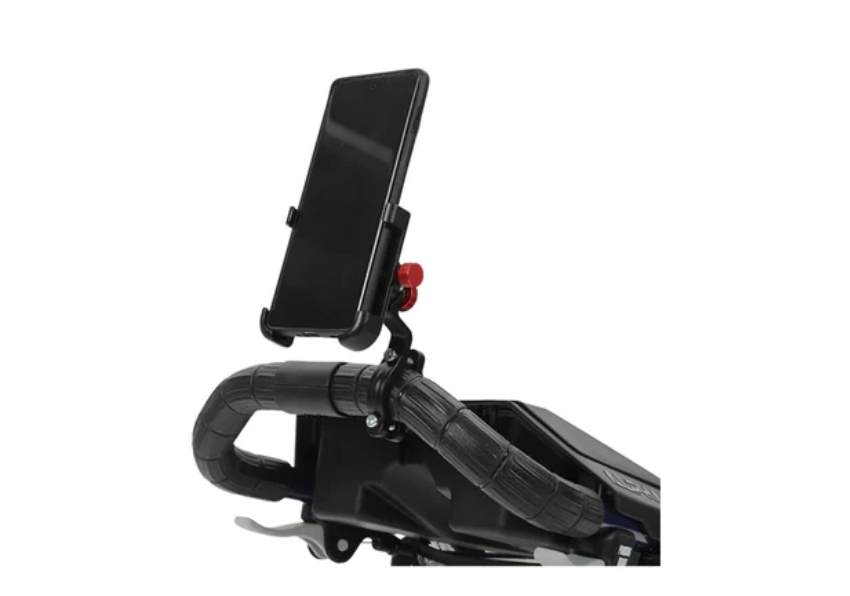
The Cybercart keeps the controls simple: an easy-to-read LCD remote with an emergency stop and out-of-range auto-stop, a large storage console and cup/phone holders, plus anti-tip protection. Small touches, front-wheel lock, automatic parking brake, and a low centre of gravity, all add up to consistent bag stability during uneven walks. Alphard also publishes manuals and customer resources, but buyers should confirm warranty and local service options through their seller.
Real-use examples
Dawn round: load in under a minute, walk the first nine, engage downhill control on a steep par-4, finish still feeling fresh.
Walking league: a couple plays 36 holes in a match; the battery lasts, and both feel less sore the next day. Both show how the Cybercart reduces strain without replacing the walk.
Who should pick the Cybercart
Choose it if you:
Walk most rounds and want a remote that handles slopes predictably.
Prioritise long battery life and stability over absolute lightness.
Want a simple, one-click fold and practical on-board storage.
Product Details
Drive: Dual 180W hub motors.
Battery: 37V lithium pack (~236.8Wh). Claimed up to 36 holes per charge under normal use.
Folded size: 25″ × 20″ × 17.7″.
Weight: 37–38 lbs (battery additional ~3 lbs).
Remote: LCD remote with auto-stop out-of-range safety.
Precision remote control for fine steering and speed tracking.
Long-life battery that charges from any standard wall outlet.
Built-in safety: auto stop on signal loss and parking brake for slopes.
One-click fold for quick setup and compact storage.
Low centre of gravity for bag stability across uneven ground.
User-friendly extras include a storage console, phone/cup holders, and anti-tip protection.
If you want a trolley that behaves like a careful, dependable teammate, keeps you walking, manages slopes, and folds away without drama, the Alphard Cybercart is worth a close look. For players who treat tech like a trusted teammate (think: consistent controls, predictable outcomes), it delivers a simple, stability-first experience.
We are a one-stop-shop for indoor golf equipment and supplies and a full-service digital marketing and distribution agency offering a wide range of solutions for the golf industry. With innovative data-driven marketing strategies, we help golf related businesses of any size maximize their online earning potential.
ProTee United’s new VX Launch Monitor perfectly balances high tech and simplicity. Its slick design and high accuracy make it the ideal launch monitor for your home. The most anticipated ceiling launch monitor right now, with a wide variety of great features.